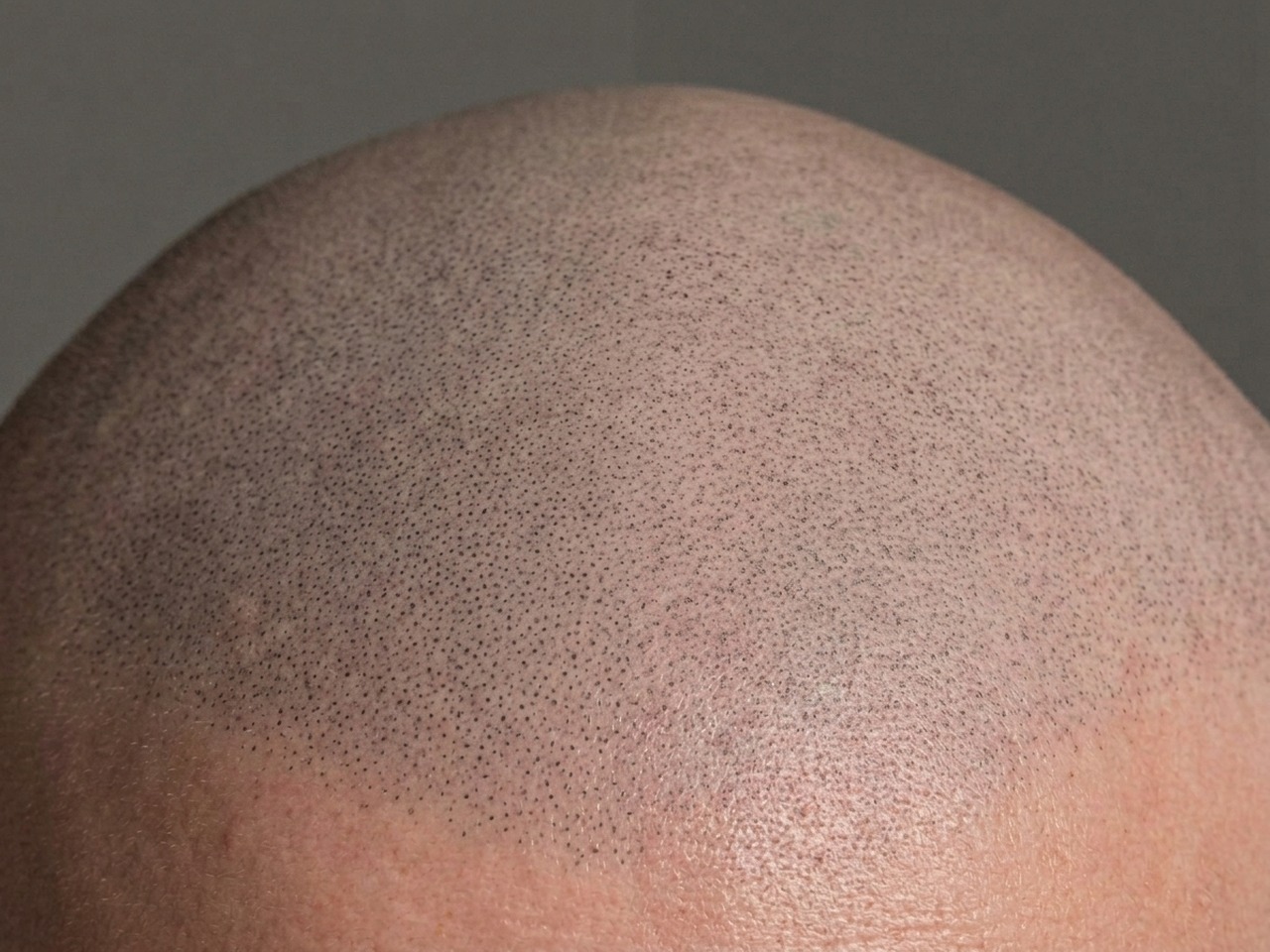
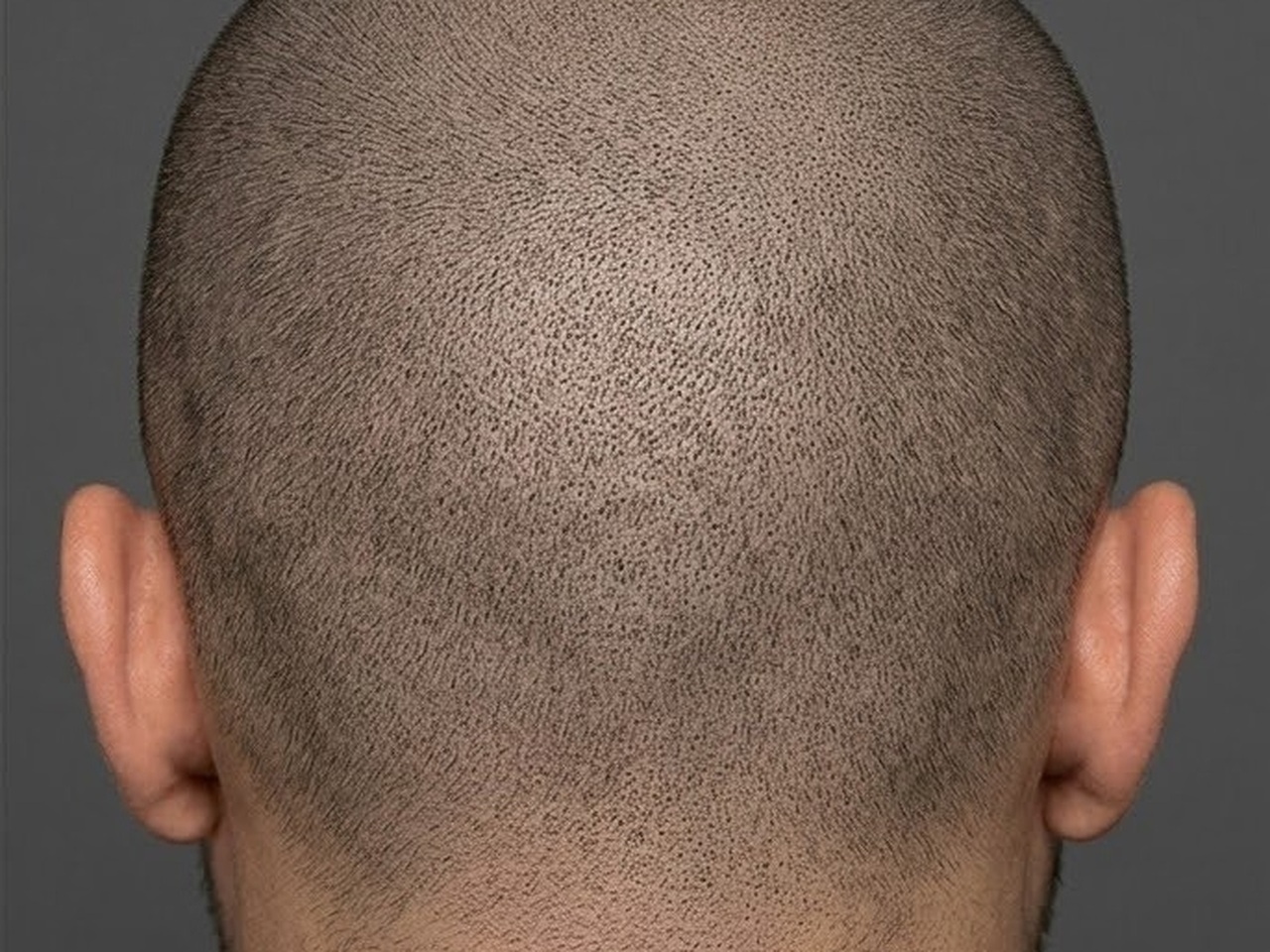
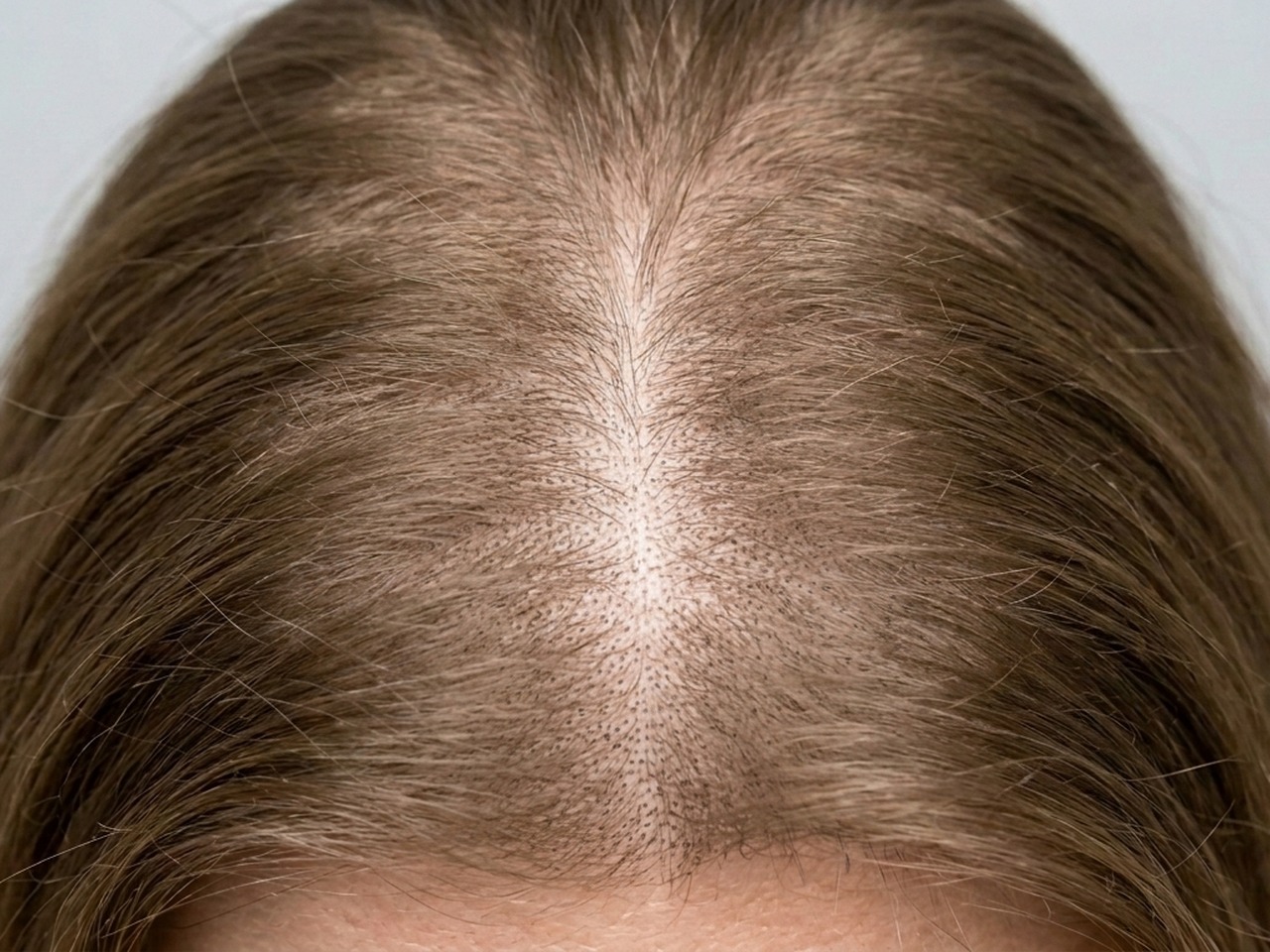
What is Scalp Micropigmentation? The Ultimate Hair Loss Solution
Scalp micropigmentation is a non-invasive cosmetic procedure that replicates the appearance of individual hair follicles using tiny, precisely placed deposits of pigment in the upper layer of the scalp. No surgery, no incisions, no medication and no downtime.
It is often described as a hair tattoo, and technically it is a tattoo — but the comparison stops there. The needles, depth, pigment and intent are all different, and those differences are the reason a well-executed SMP treatment reads as hair rather than ink.
How SMP differs from a traditional tattoo
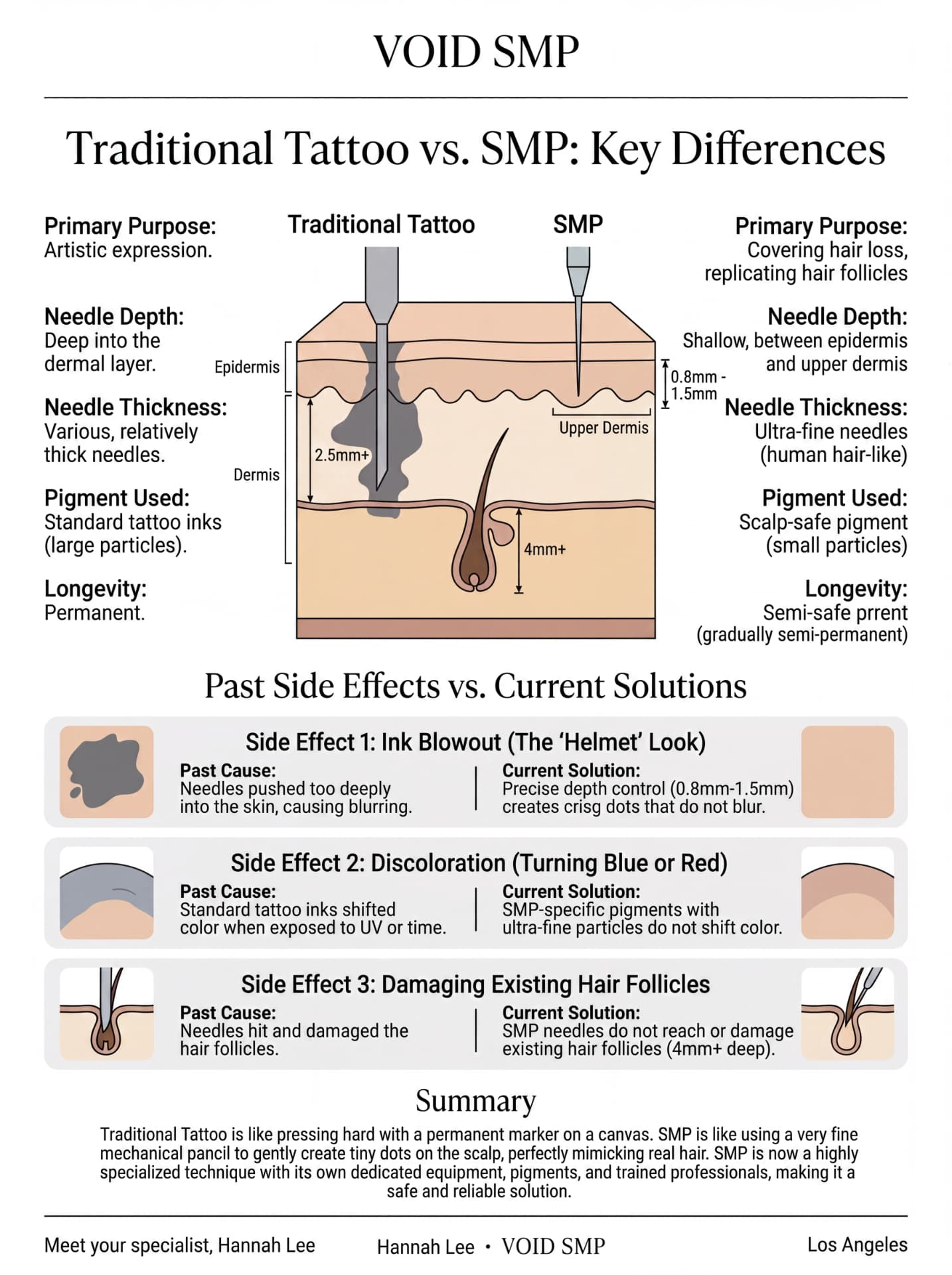
A traditional tattoo exists to hold a design. Pigment is driven deep into the dermal layer — 2.5 mm and beyond — with comparatively thick needles and large-particle inks, and it is intended to be permanent.
Scalp micropigmentation exists to imitate biology. Ultra-fine, hair-width needles place scalp-safe, small-particle pigment shallowly between the epidermis and upper dermis, at roughly 0.8 to 1.5 mm. That shallow, controlled depth is what keeps each impression crisp instead of spreading into a blurred spot, and it is why SMP fades gradually rather than staying fixed forever.
- Purpose: replicating follicles, not artistic expression
- Depth: 0.8–1.5 mm rather than 2.5 mm and deeper
- Needles: ultra-fine, close to the diameter of a human hair
- Pigment: scalp-safe, small-particle, colour-stable formulations
- Longevity: semi-permanent, softening gradually over several years
The side effects people remember — and why they no longer apply
Ink blowout, or the helmet look
Older work pushed needles too deeply, so each point spread sideways beneath the skin and merged into a solid, flat shape. Precise depth control between 0.8 and 1.5 mm keeps every impression discrete, which is what preserves the illusion of separate follicles.
Discolouration to blue or red
Standard tattoo inks contain pigment blends that shift colour under UV exposure and over time. SMP-specific pigments use ultra-fine carbon-based particles formulated not to shift hue as they soften.
Damage to existing hair
Hair follicles sit around 4 mm below the surface. SMP needles never travel that far, so existing hair is untouched. SMP is routinely used to add density between living hairs rather than only on shaved scalps.
Who scalp micropigmentation is for
- Receding hairlines and thinning temples, with or without remaining hair
- Diffuse thinning where the scalp shows through under bright light
- Crown loss and vertex thinning
- Female thinning along the part line and at the temples
- Hair transplant scars, including FUT strip scars and FUE dot scarring
- Alopecia areata, totalis and universalis
- Anyone who wants a clean, defined shaved-head look rather than an uneven one
What the treatment involves
Treatment is delivered across two to four sessions, spaced one to two weeks apart, each lasting roughly two to four hours. Building density in layers allows the artist to see how your skin healed the previous pass and adjust saturation, spacing and shade before committing to the final depth of tone.
Most clients describe the sensation as a light, repetitive tapping — considerably milder than a conventional tattoo, because the needle never reaches the deeper, more sensitive dermal layer.
Direct answers
Does SMP look real?
Yes, when it is executed correctly. Each impression is placed with a hair-width needle at a depth that keeps it crisp, and the field is built with randomised spacing, varied impression size and angle matching to your natural growth direction. At conversation distance it reads as closely shaved hair or added density. The work that looks fake is uniform, flat and sharply outlined — a result of poor spacing and excessive depth, not of the technique itself.
Is scalp micropigmentation a permanent solution?
It is semi-permanent. Because pigment is placed shallowly, between the epidermis and upper dermis, it softens gradually over roughly three to six years rather than remaining fixed forever. Most clients book a refresh session every few years to restore tone. That gradual fade is an advantage: your hairline can be adapted as your face and hair change instead of being locked in permanently.
Is SMP the same as a hair tattoo?
SMP is a specialised form of cosmetic tattooing, but it uses ultra-fine needles, shallower placement, scalp-specific small-particle pigment and dedicated equipment. A traditional tattoo places large-particle ink deep in the dermis to hold a permanent design; SMP places tiny colour-stable points near the surface to imitate follicles.
Does SMP damage existing hair?
No. Hair follicles sit about 4 mm beneath the surface, well below the 0.8–1.5 mm working depth of SMP, so existing hair is not reached or damaged. SMP is frequently used to add visual density between existing hairs.