
Scar camouflage
that breaks the line.
Scar tissue takes pigment differently from healthy scalp. Camouflage is not about filling a scar in — it's about interrupting the eye's ability to track it across the surrounding hair.
Visual treatment guide
Blend the contrast, preserve the texture
AI-generated photorealistic educational example — not a real client photograph or treatment result. Individual results vary.
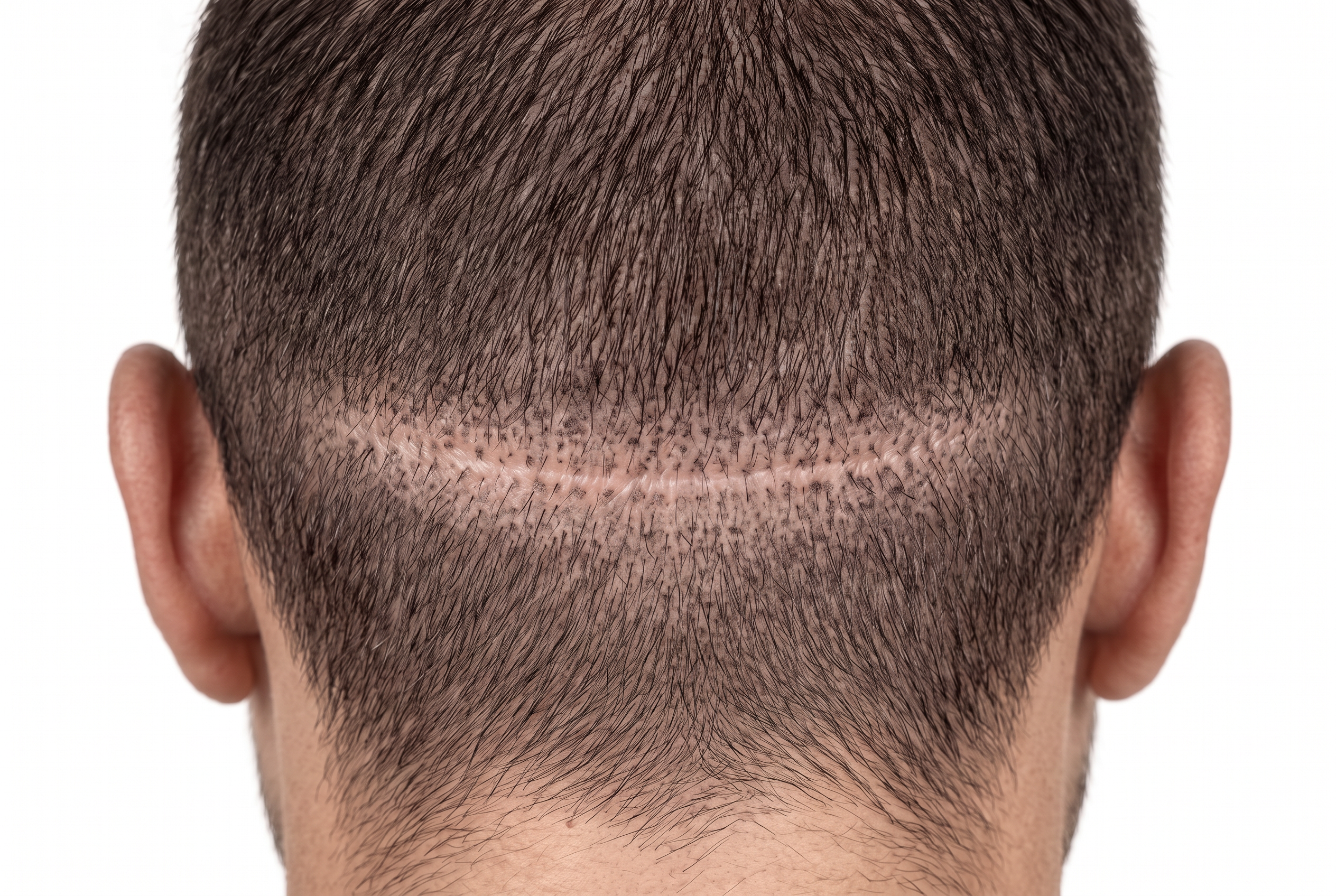
01Healed scar tissue
02Transition into surrounding follicles
Treatment area
Healed scalp scars
Suitable healed FUT, FUE or other scalp scars are assessed for texture and pigment response.
How it works
Tone-matched impressions
Irregular dots visually blend lighter scar tissue with surrounding follicles.
Intended cosmetic effect
A less noticeable contrast
Camouflage may soften visibility; it does not remove the scar or change its texture.
Scars we treat
FUT / strip scars
Linear donor scars across the occipital area, broken up with irregular tone-matched impressions.
FUE dot scars
Scattered white punch marks blended so the donor area reads as even shaved density again.
Trauma & surgical scars
Accident, burn and neurosurgical scars, treated once fully healed and stable.
Why scar work takes patience
Scar tissue is less predictable — it can hold pigment darker, lighter or unevenly. A small test patch is placed first, healing is reviewed, and only then is full coverage built. Most scar cases complete in two sessions; complex or raised tissue may need three.
Before you book
Scars should be at least twelve months old and fully matured, with no active keloid growth. Bring photos of the donor area under natural light to the consultation so healing and tone can be assessed accurately.
Ready to see it on your own scalp?
A complimentary consultation — virtual or in person — covers hairline design, pigment matching, session count and a tailored estimate.