What Causes Hair Thinning in Men? DHT Explained Simply
Most male hair thinning is caused by androgenetic alopecia: an inherited sensitivity to dihydrotestosterone (DHT), a hormone byproduct of testosterone. DHT binds to receptors in genetically susceptible follicles and gradually shrinks them until the hair they produce is too fine and short to cover the scalp.
It is not caused by shampoo, hats, or wearing your hair a certain way. At VOID SMP in Los Angeles we see the same pattern every week — clients who spent two years changing products before realising the mechanism was hormonal all along.
The short answer: follicle miniaturisation
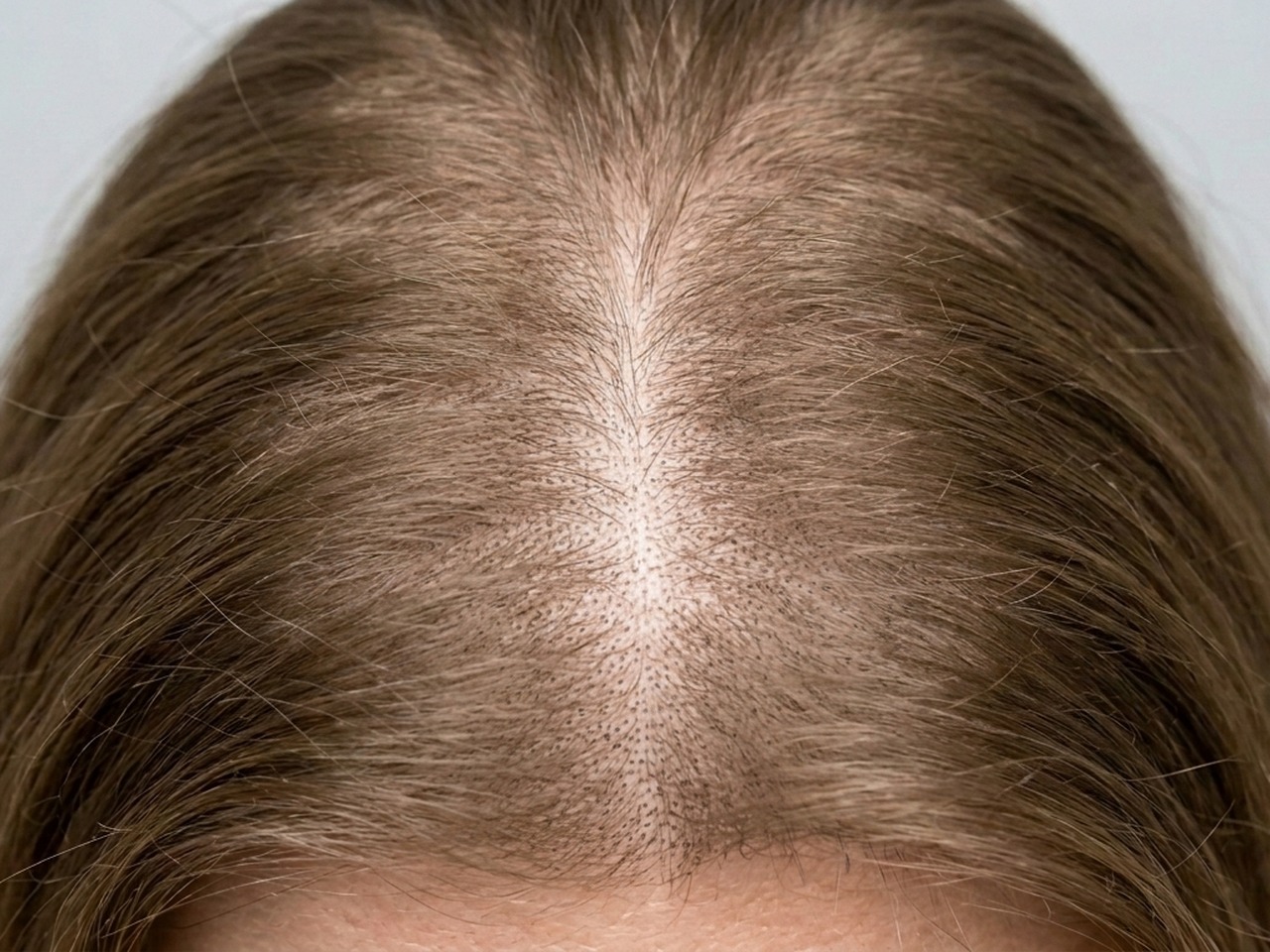
A healthy follicle cycles through growth, rest and shedding for years at a time. When DHT binds to a sensitive follicle, each new cycle produces a slightly thinner, slightly shorter hair and the growth phase gets shorter. After enough cycles the hair is a nearly invisible vellus strand, and eventually the follicle stops producing altogether.
This is why thinning looks gradual. You are not losing hairs in handfuls — you are losing hair diameter, and diameter is what creates visual coverage.
Why it shows at the hairline and crown first
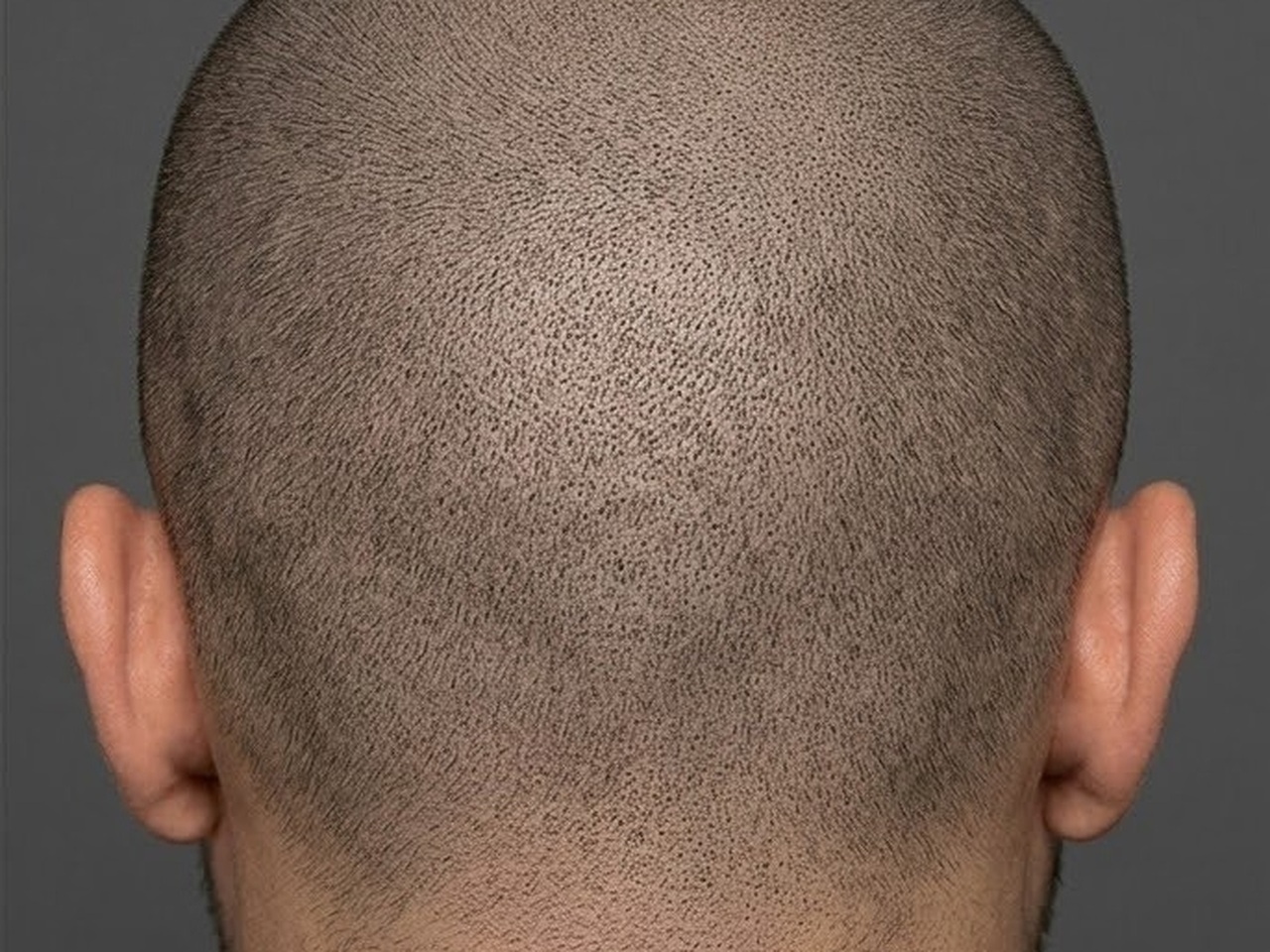
Receptor sensitivity is not evenly distributed across the scalp. The frontal hairline, temples and crown carry the highest concentration of DHT-sensitive follicles, while the back and sides of the head are largely resistant — which is exactly why donor hair for transplants is harvested from there.
- Temples recede first in most Norwood patterns
- The crown thins in a spiral outward from the whorl
- The mid-scalp bridge is usually the last area to go
- The permanent horseshoe band at the back rarely miniaturises
Other factors that accelerate it
Genetics set the ceiling, but several things change the pace: chronic stress (through telogen effluvium), rapid weight loss, iron or vitamin D deficiency, thyroid disorders, certain medications and smoking. These rarely cause pattern baldness on their own; they pull the timeline forward.
What you can actually do about it in Los Angeles
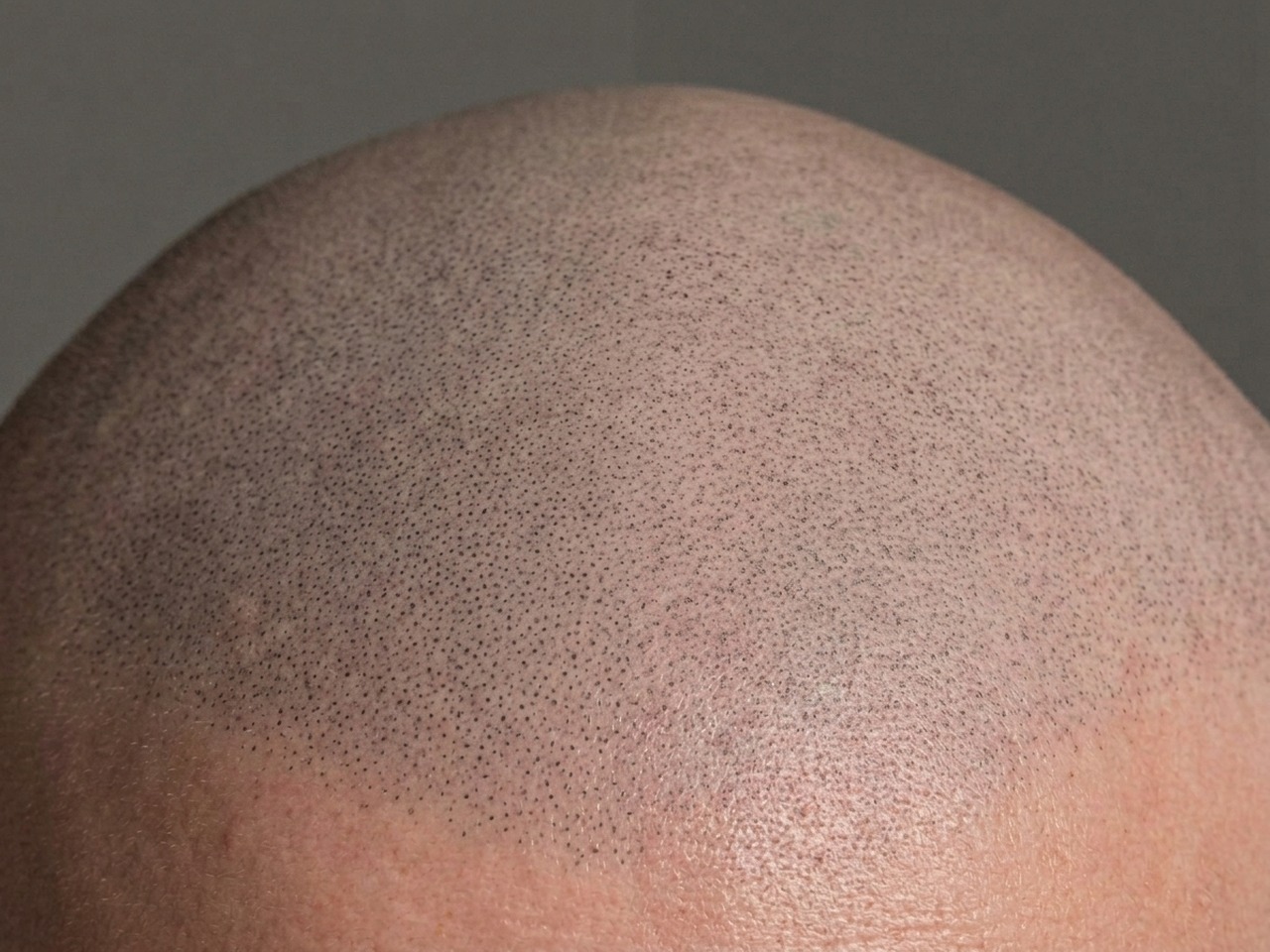
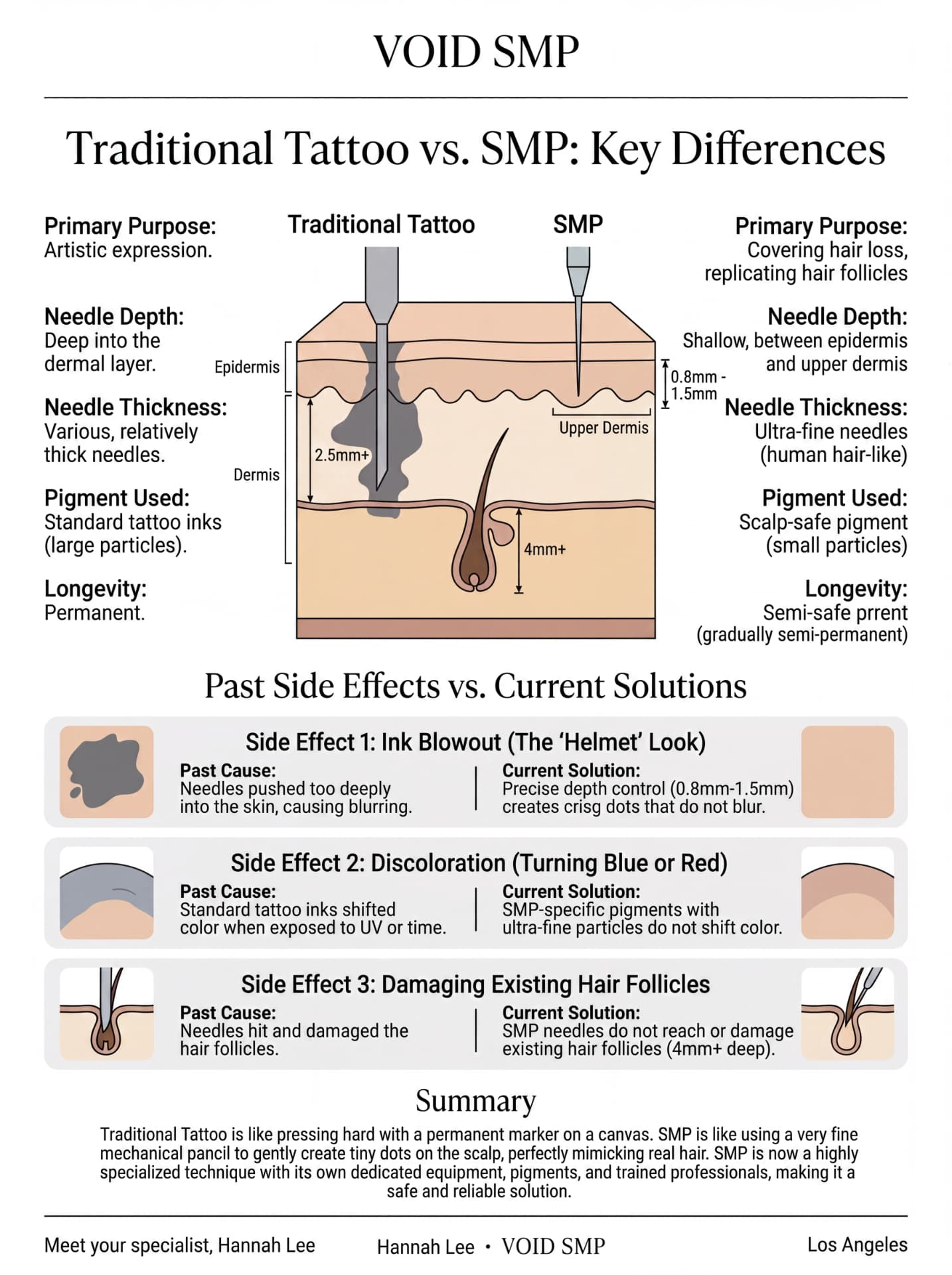
There are three honest categories. Medical maintenance (finasteride, minoxidil) can slow or partially reverse miniaturisation but requires lifelong use. Surgery relocates resistant follicles. Scalp micropigmentation Los Angeles clients choose is a non-surgical cosmetic option: it does not regrow hair, it removes the contrast between scalp and hair so the thinning stops being visible.
Many of our clients combine them — medication to hold what they have, and SMP LA sessions to restore the look of density immediately.
Direct answers
Is male hair thinning reversible?
Partially, and only early. If follicles are miniaturised but still alive, medical treatment can thicken them again. Once a follicle is dormant, nothing regrows it — which is when cosmetic options like scalp micropigmentation become the realistic route.
At what age does male hair thinning usually start?
Around 20 percent of men see measurable thinning by 25, and roughly half by 50. Early onset usually means a faster progression, which is why early assessment matters.
Can SMP be done while I'm still losing hair?
Yes. We design for where your hair loss is heading, not just where it is today, and add density in later sessions as the pattern develops.
Where can I get an assessment in Los Angeles?
VOID SMP offers a complimentary consultation at our Wilshire Blvd studio in Los Angeles, in person or virtually, including a hairline map and honest guidance on whether SMP is right for your stage of loss.